Before appointing a brickwork subcontractor, a main contractor or housebuilder should check five things: competence, paperwork, capacity, workmanship and the price. This checklist comes from Kris Williams of KW Brickwork Contractors Ltd, a bricklaying contractor based in Welshpool, Powys, and draws on what we're asked for on sites across Mid Wales, Shropshire and the West Midlands.
Brickwork is usually one of the biggest trade packages on a housing site and one of the most visible on any building. Get the subcontractor wrong and it shows for decades, in the facing brick and in the programme. Here's what to look at before you sign anything.
1. Competence: your legal duty when appointing
Under the Construction (Design and Management) Regulations 2015, a contractor who appoints a subcontractor has to make sure that subcontractor has the skills, knowledge and experience, and where relevant the organisational capability, to carry out the work safely. The Health and Safety Executive's guidance on contractor duties sets this out. This isn't only good practice. It's a legal duty, and it's worth being able to show how you checked.
Practical ways to check competence:
- Qualifications. Ask what the people doing the work hold. For bricklayers, the usual benchmarks are the NVQ Level 2 and Level 3 Diplomas in Trowel Occupations. A Level 3 includes setting out, repairs, and architectural and decorative work, as well as the core brick and block units. Ofqual-regulated qualifications can be checked on the Ofqual Register by qualification number.
- CSCS cards. Most main contractors require a Construction Skills Certification Scheme card for everyone on site. According to CSCS, an NVQ Level 2 in the relevant trade is the route to the Blue Skilled Worker card and a Level 3 to the Gold card. Applicants also need to have passed the CITB Health, Safety and Environment test. Check the card type matches the work, and check the cards are in date.
- Relevant experience. Ask for photos of similar work and, ideally, a reference from a site manager. A subcontractor who builds lovely extensions may not be set up to run twenty plots to a programme, and the reverse is also true.
2. Paperwork: tax, insurance and company details
Construction Industry Scheme (CIS). If you're a contractor under HMRC's Construction Industry Scheme, you must verify a new subcontractor with HMRC before you make the first payment. Verification tells you whether to pay gross or deduct tax. According to HMRC, the deduction is 20% for registered subcontractors and 30% where HMRC can't match the subcontractor's details. Get the subcontractor's legal name, Unique Taxpayer Reference and company number early so verification doesn't hold up the first valuation.
Insurance. Ask for current certificates, not just a verbal assurance.
- Employers' liability insurance is a legal requirement under the Employers' Liability (Compulsory Insurance) Act 1969 for any business that employs people. The minimum cover is £5 million for any one claim.
- Public liability insurance isn't a legal requirement, but almost every main contractor and housebuilder asks for it, often at a set minimum level. Check the certificate's limit against your contract requirements.
- Check the insured name matches the company you're appointing, and note the expiry dates.
Company details. If you're contracting with a limited company, check the name and number on Companies House. It takes a minute, and it confirms who you're actually contracting with.
3. Health and safety documents
On most sites you'll want a risk assessment and method statement for the brickwork package before work starts. It should cover working at height off scaffold, manual handling of blocks and bricks, cutting and dust control, loading out scaffold within its design limits, and how materials move around site. Generic paperwork is a warning sign. The method statement should read like it was written for your job.
Also agree who is supplying what: mixers or silo mortar, forklifts or telescopic handlers, scaffold (and who adapts it between lifts), welfare, and waste disposal. Misunderstandings here cost more time than any other part of the package.
4. Capacity and programme
The most common failure on a brickwork package isn't poor workmanship. It's the subcontractor not having enough people when your programme needs them. Ask directly:
- How many plots or how much area can you cover per week at the stage we'll need you?
- What else are you committed to over the same period?
- Who is the day-to-day contact, and are they on site?
- How do you handle weather? Cold-weather working is a real constraint. The NHBC Standards say masonry shouldn't be built when the air temperature is below 2°C and falling, and a good subcontractor plans for that rather than being surprised by it.
A subcontractor who tells you honestly what they can't do is more useful than one who says yes to everything. At KW Brickwork we won't give a capacity figure until we've seen the drawings and programme, for exactly that reason.
5. Workmanship: what to look at on site
Photos can flatter, so if you can, look at finished work in person. On facing brickwork, check:
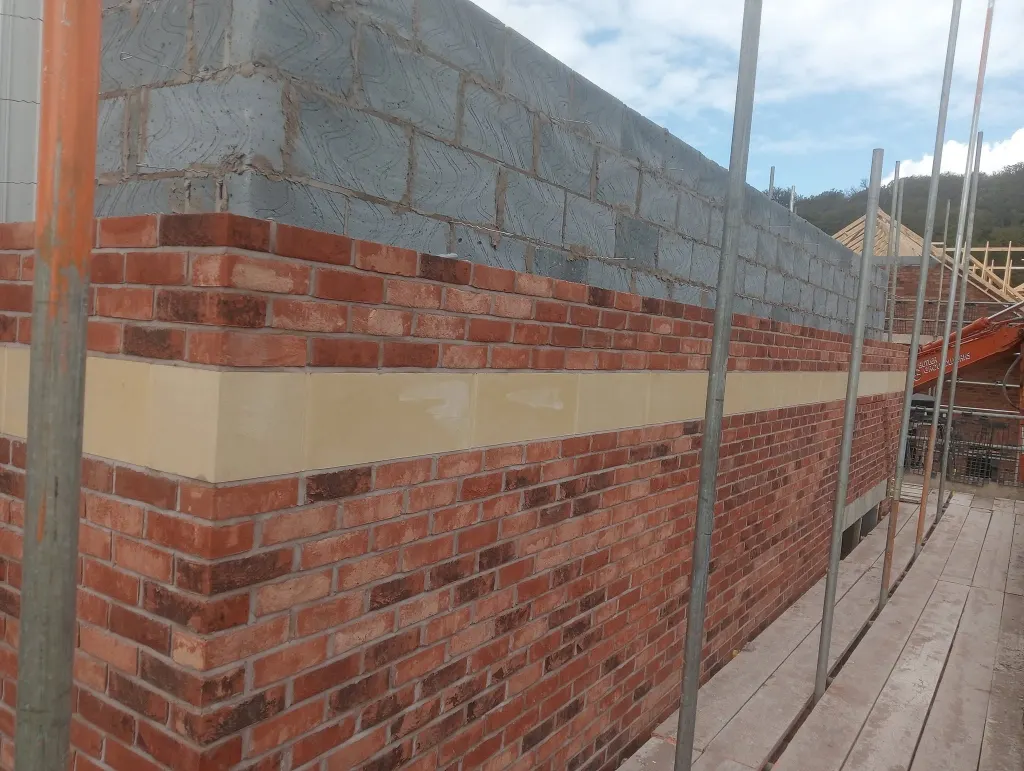
- Colour consistency. There should be no obvious bands or patches of different colour. The NHBC Standards expect bricks from different batches to be mixed unless the manufacturer has blended them. The Brick Development Association recommends drawing from at least three packs at once.
- Gauge and joints. Bed joints should be even and level, perpends in line, and the joint profile consistent.
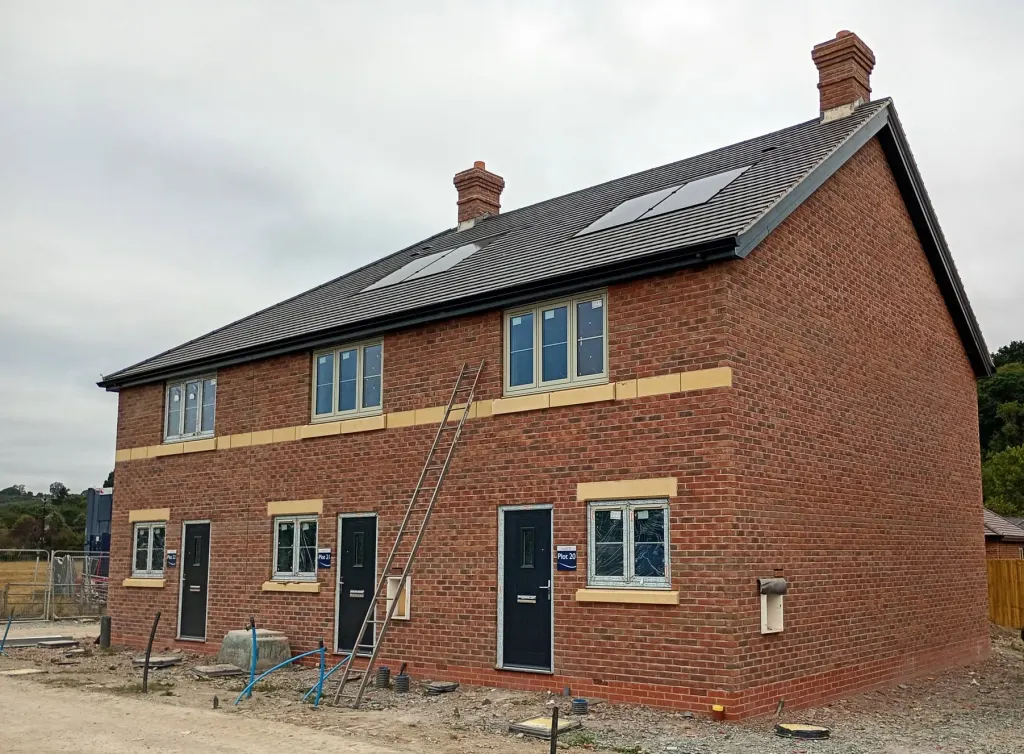
- Openings and details. Reveals should be square and plumb, and heads and sills level. Stone bands and plinths should line through across elevations and around corners.
- Cleanliness. Look for mortar smears, snots on the face and mortar left on sills and in the cavity.
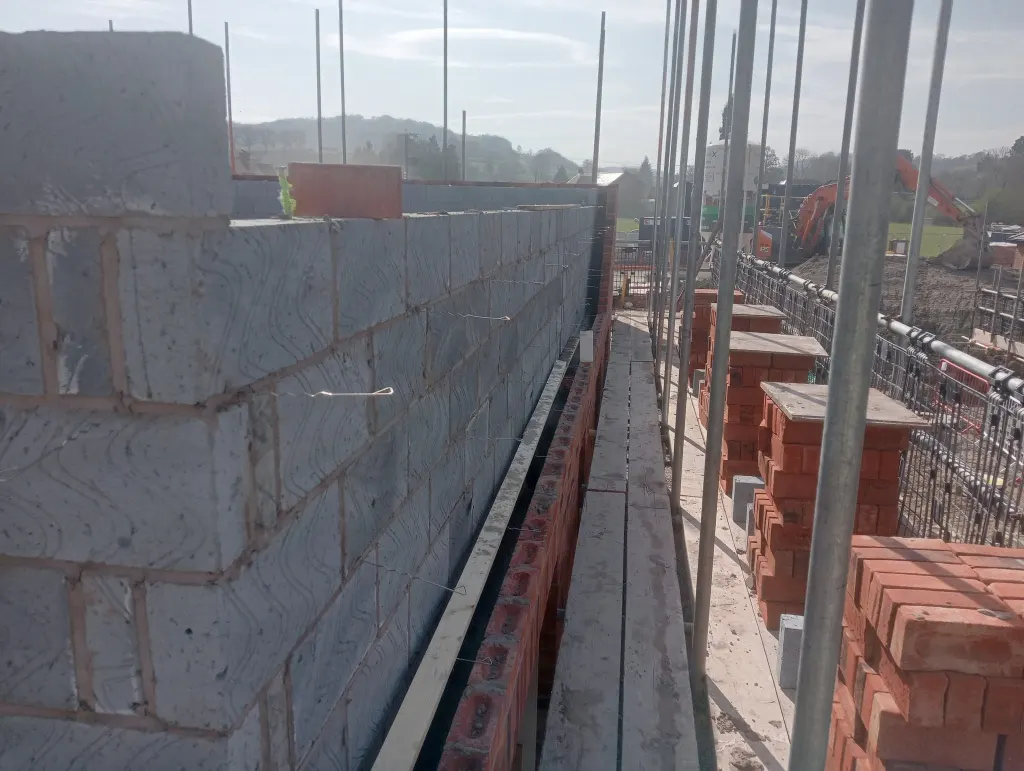
- The hidden bits. Ask how they handle wall ties, cavity trays, weep vents and insulation. These are hard to check once the wall is built, so it matters that the subcontractor treats them as part of the job.
6. The price
When comparing prices, make sure they cover the same scope. Check whether each price includes:
- both leaves, or facing brick only
- building in lintels, trays, ties and insulation, and who supplies them
- stone or reconstituted stone details, chimneys and feature brickwork
- labour-only, or supply and fix
- mortar, and who provides the mixing plant
- scaffold adaptations and loading out
- cleaning down and making good
A low price that leaves half of these out isn't a saving. Ask for inclusions and exclusions in writing.
A short checklist
Before you appoint, you should have:
- Evidence of competence (qualifications, CSCS cards, relevant experience)
- CIS verification details (legal name, Unique Taxpayer Reference, company number)
- Current employers' and public liability insurance certificates
- A job-specific risk assessment and method statement
- A clear, honest statement of capacity against your programme
- A written price with inclusions and exclusions
If you're looking for a brickwork subcontractor for new-build housing or a larger package in Mid Wales, Shropshire or the West Midlands, send Kris the drawings and programme and we'll answer each of these questions for your job.