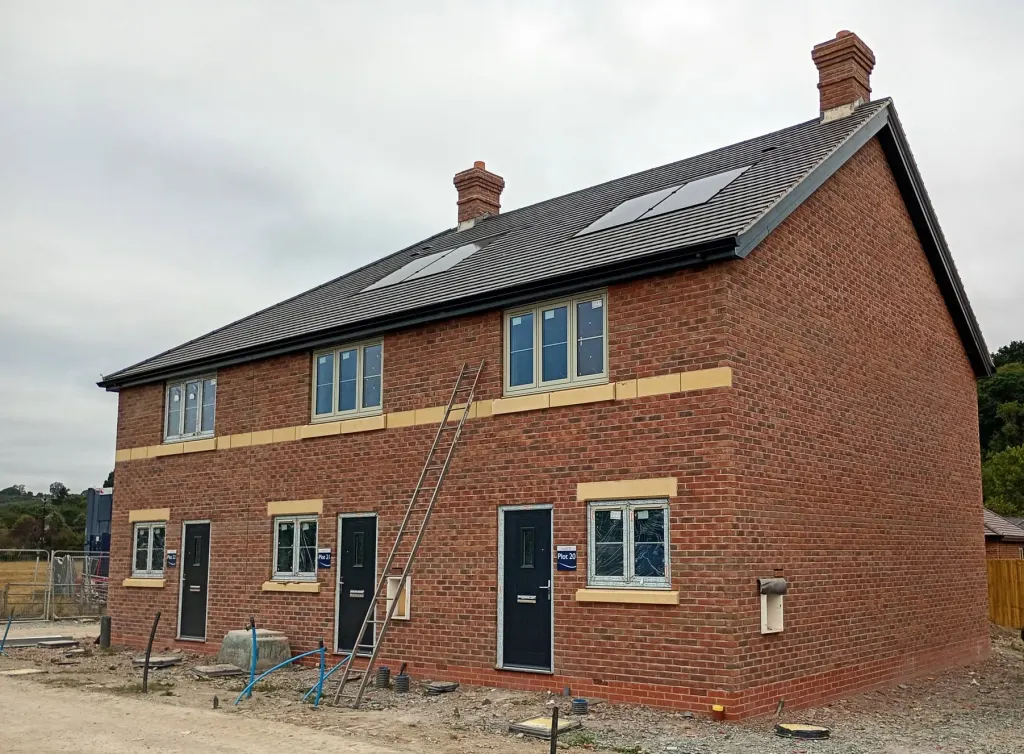
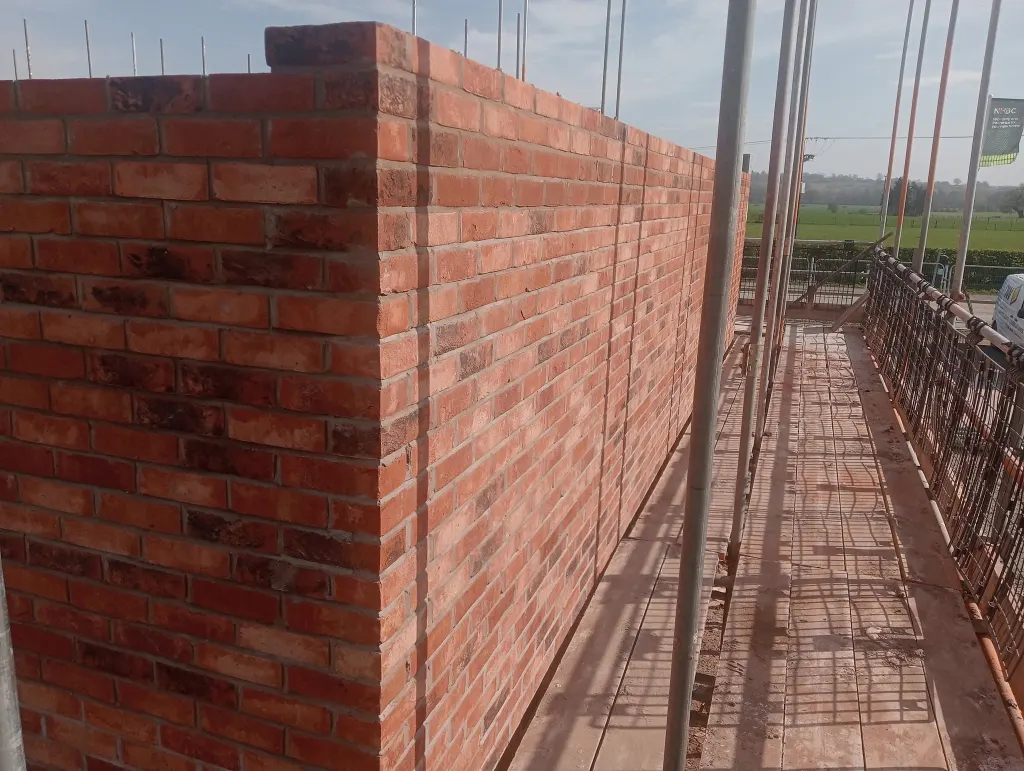
An NVQ Level 3 in Trowel Occupations is a work-based qualification for bricklayers, assessed on real jobs rather than in a college workshop. It covers setting out, building brick and block structures and cladding, repairing masonry to match existing work, and architectural features such as arches and curved walls. Kris Williams of KW Brickwork Contractors Ltd, a bricklaying contractor based in Welshpool, Powys, was awarded the NOCN version in June 2026. Here's what it involves.
What kind of qualification it is
The full title of Kris's qualification is the NOCN Level 3 NVQ Diploma in Trowel Occupations (Construction), qualification number 603/5461/6. A few things are worth knowing about it:
- It's regulated by Ofqual, the qualifications regulator for England, and appears on the Ofqual Register.
- It's awarded by NOCN, one of the awarding organisations for construction NVQs.
- It's work-based. NOCN's description says the learner must be employed to undertake it, because competence is assessed in a real workplace. Evidence comes from work actually carried out on site, observed and checked by a qualified assessor.
- It's a substantial qualification. NOCN's published details for the qualification give a Total Qualification Time of 1,470 hours and a minimum of 163 credits, made up of eight mandatory units plus one unit from an optional group.
An NVQ is not a course certificate. It confirms that someone has shown they can do the work, to the standard, on site.
The units, one by one
Here are the units on Kris's certificate, with what they mean in practice. The certificate also lists the range within some units: the specific types of work the candidate was assessed on.
Working safely and working with others
- Conforming to General Health, Safety and Welfare in the Workplace (Level 1). Site safety: hazards, personal protective equipment, safe working and welfare.
- Confirming Work Activities and Resources for an Occupational Work Area in the Workplace (Level 3). Planning the work: interpreting drawings and specifications, and working out the materials, equipment and labour needed.
- Confirming the Occupational Method of Work in the Workplace (Level 3). Deciding how the work will be done, in what order, and to what standard.
- Developing and Maintaining Good Occupational Working Relationships in the Workplace (Level 3). Working with site managers, other trades and clients. On a busy site this matters more than people expect.
Core bricklaying
- Erecting masonry structures in the workplace (Level 2). Building walls in brick and block. This is the bread and butter of every housing plot.
- Setting out to form masonry structures in the workplace (Level 2). Setting out from drawings, with a range covering straight walls, right angles, obtuse angles (including batters), acute angles, curves on plan, curves in elevation and openings. Accurate setting out is what makes stone bands line through and openings sit where the drawings put them.
- Erecting Masonry Cladding in the Workplace (Level 2). Brick and block cladding, including cladding to a pre-erected timber frame. This is directly relevant to timber-frame housing and to brick cladding on framed buildings.
Level 3 trade skills
- Repairing and maintaining masonry structures in the workplace (Level 3). Repairing brick and block, with a range covering matching existing materials and continuing existing bonding. It's the skill behind an extension or repair that blends in rather than standing out.
- Erecting masonry to form architectural and decorative structures in the workplace (Level 3). The range on the certificate covers arches (rough-ringed, axed and gauged), walls with flush, projecting or decorative features, walls curved on plan, walls curved in elevation and walls splayed on plan.
A quick glossary for the arch types:
- A rough-ringed arch is built with ordinary, uncut bricks, with the joints wedge-shaped to form the curve.
- An axed arch uses bricks cut to a taper so the joints stay a more even thickness.
- A gauged arch uses bricks cut and rubbed very precisely, with fine joints. It's the most exacting of the three.
The full table, with unit codes, is on our Qualifications page.
Level 2 vs Level 3
A Level 2 NVQ Diploma in Trowel Occupations covers the core skills of building brick and block walls to a competent standard. The Level 3 adds more complex and more responsible work: planning and confirming methods and resources, repairs that match existing work, and architectural and decorative masonry.
For site access, CSCS says a Level 2 NVQ in the relevant occupation is the route to the Blue Skilled Worker card and a Level 3 to the Gold card, along with the CITB Health, Safety and Environment test. Check the current requirements with CSCS, as schemes do change.
What it tells a main contractor or client
A Level 3 NVQ doesn't guarantee every wall is perfect. Nothing does. But it does tell you:
- the person has been independently assessed doing real work to a national standard
- they've shown competence in setting out, not just laying bricks to someone else's lines
- they've been assessed on repairs, matching and bonding, which matters for extensions and alterations
- they've been assessed on architectural features, which matters for arches, curves and detailed elevations
For a main contractor with duties under the Construction (Design and Management) Regulations 2015 to appoint competent subcontractors, a recognised qualification is part of the evidence. It sits alongside experience, references and seeing the work.
How to check a qualification is genuine
Ofqual-regulated qualifications are listed on the Ofqual Register at register.ofqual.gov.uk. You can search for the qualification number, 603/5461/6 in this case, to confirm the qualification exists, who awards it and its level. To confirm an individual's award, ask to see the certificate. Awarding organisations such as NOCN may also be able to verify certificates on request.
How it shows up in our work
The units map directly onto what KW Brickwork does. Setting out and erecting masonry is every new-build housing plot. Cladding is the brickwork on timber-frame houses and framed public-sector buildings. Repairs, matching and bonding are the heart of general brickwork such as extensions. Arches and curved walls are the details that set a job apart. If you've got a job that needs any of them, send Kris the details.