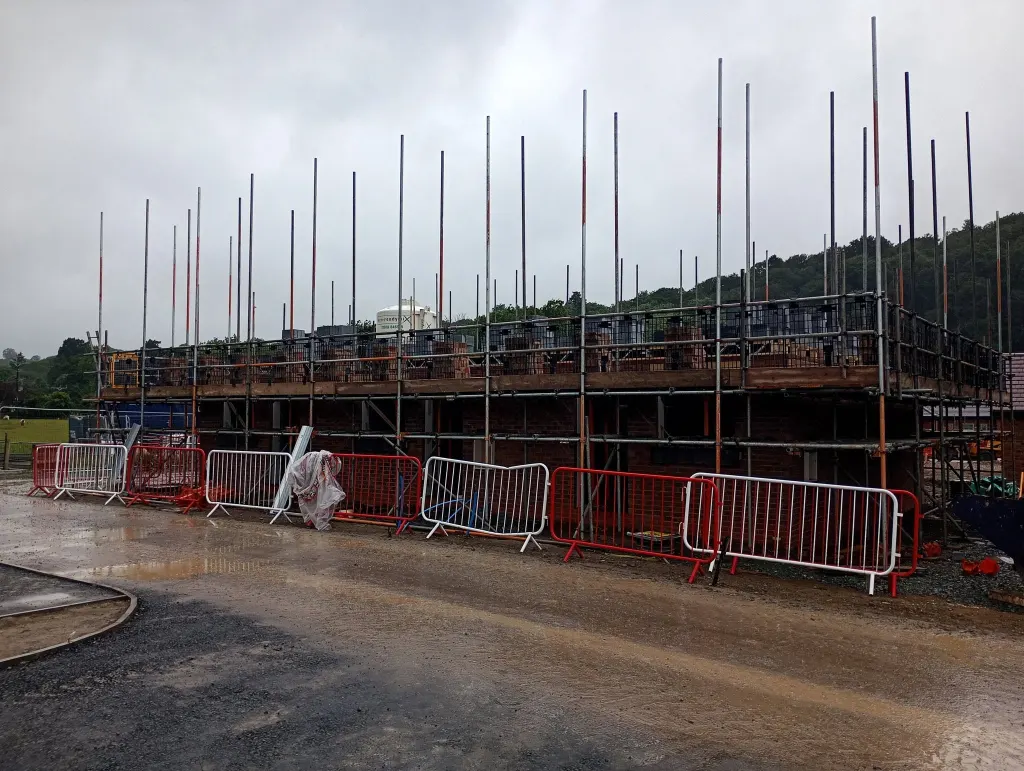
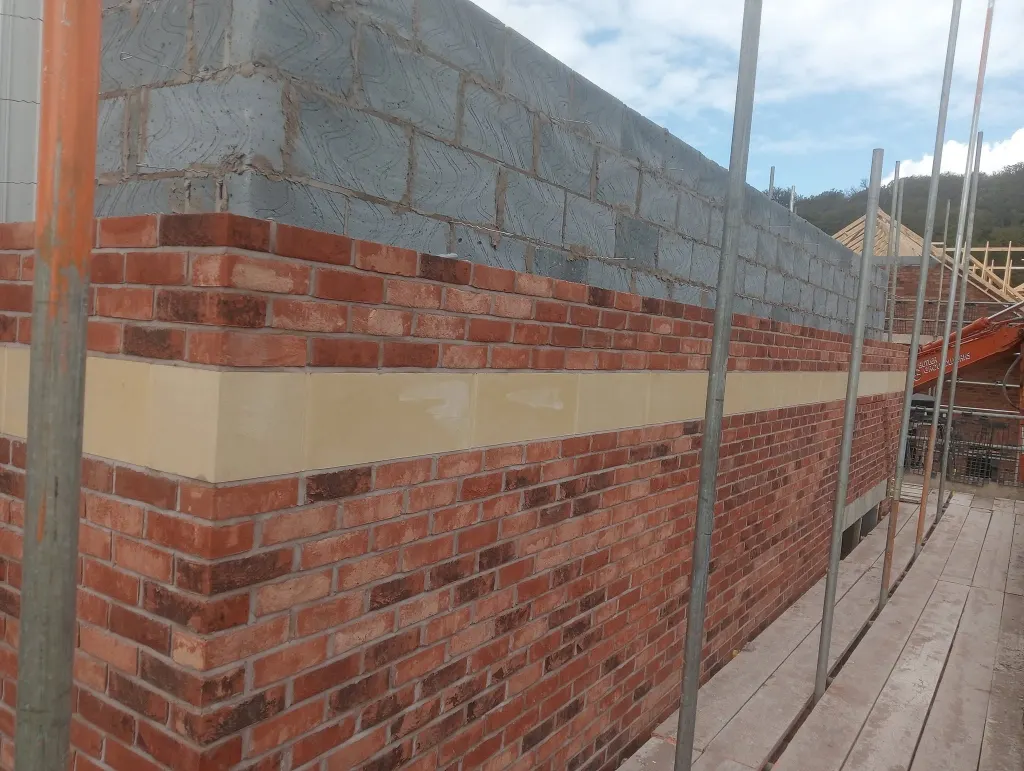
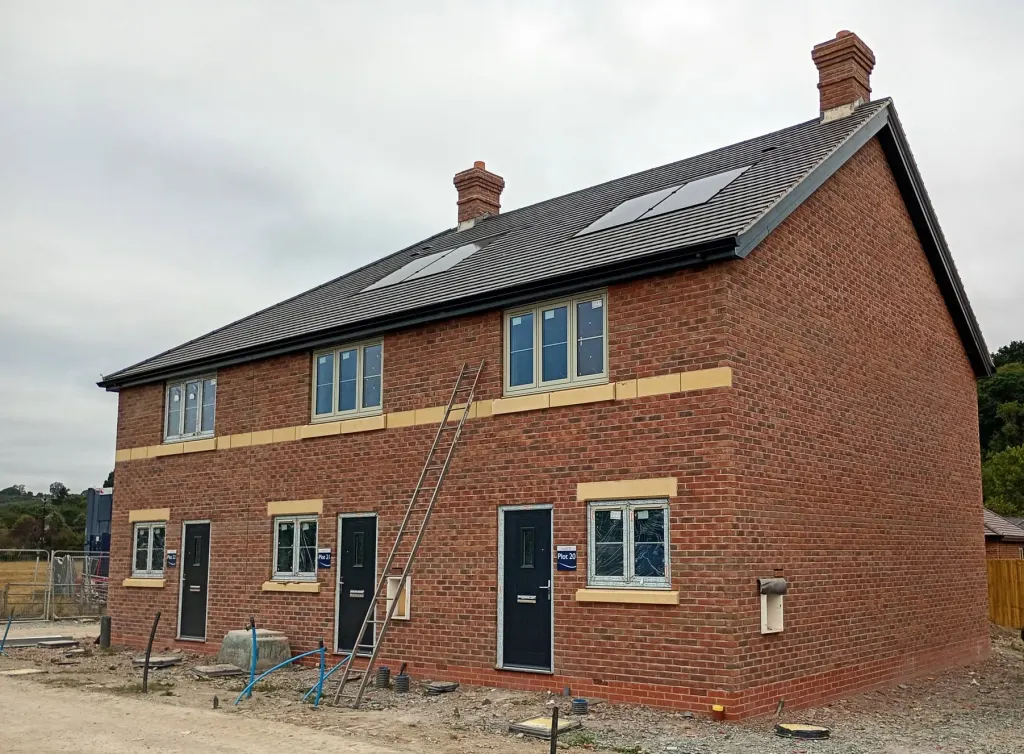
Bricks and blocks shouldn't be laid when the air temperature is below 2°C and falling, and new work has to be protected from frost until the mortar has set. That's the core of the NHBC Standards' guidance on cold-weather working. KW Brickwork Contractors Ltd, a bricklaying contractor based in Welshpool, Powys, explains how we apply it on sites across Mid Wales, Shropshire and the West Midlands.
Winter brickwork is a balance. Programmes don't stop for the weather, but walls built in the wrong conditions can fail. Frost damage isn't always obvious on the day, and fixing it means taking the wall down. Here's how to get it right.
Why cold weather matters for mortar
Mortar gains strength as the cement in it hydrates. That process slows right down in the cold and stops if the water in the mortar freezes. Worse, water expands as it freezes, which can break up mortar that hasn't yet gained enough strength. The result can be weak, crumbly joints, loss of bond between mortar and brick, and spalled faces.
The NHBC Standards are clear about the consequence: walling damaged by frost won't regain its strength and should be taken down and rebuilt when conditions improve. There's no way to patch frost-damaged mortar back to full strength. That's why prevention matters so much.
When to stop laying
The NHBC Standards' guidance on cold-weather working for external masonry says brickwork and blockwork should not be built when the air temperature is below 2°C and falling. In practice:
- Check the forecast, not just the thermometer. A morning at 4°C that's forecast to drop below freezing by mid-afternoon is a day to stop early and cover up, not a day to push on.
- Take readings in the shade. A sunny scaffold lift can feel warm while the air temperature is still low.
- Think about overnight. Work laid in the afternoon needs protecting through the coldest part of the night, when the mortar is still young.
Many specifications and manufacturers give their own limits and conditions as well. Where the job specification is stricter than the general guidance, we follow the specification.
Don't use frozen materials
The NHBC Standards also say frozen materials shouldn't be used. That means:
- Bricks and blocks that are frozen, or coated in ice or frost, shouldn't be laid. Keep packs covered and off the ground, so they don't sit in water that then freezes.
- Sand that has frozen in the heap shouldn't be used. Cover sand heaps.
- Mortar shouldn't be made with frozen materials, and it shouldn't be used once it has started to stiffen from the cold.
Saturated materials are a problem too. Wet bricks laid in cold weather hold more water, which makes frost damage more likely, and can lead to staining and efflorescence later. Covering materials overnight is one of the simplest and most effective winter precautions.
Admixtures and "frost-proofers"
Mortar admixtures that claim to help in cold weather are available, but they need care. Use them only where the specification allows, and exactly as the manufacturer instructs. The NHBC Standards note that the setting times of additives should be checked and followed in line with the manufacturer's recommendations. Some retarded mortars take longer to set in the cold, which increases the time the work needs protecting. An admixture doesn't replace the basic rules: don't lay below the temperature limit, and protect new work.
Protecting new work
New walls need protecting from frost until the mortar has set enough to resist damage. The NHBC Standards describe covers that form a still air space to insulate the wall. In practice we:
- Cover the top of the wall at the end of every day, so rain can't soak into the new work and freeze.
- Cover the faces where frost is forecast, using insulated covers or sheeting fixed so there's an air space next to the wall, rather than sheeting flapping against it.
- Keep covers on until the mortar has set enough, which takes longer in cold weather than in summer.
- Check the work the next morning before building on it. Frost-damaged mortar can look crumbly or powdery and may scratch out easily.
Wind matters too. Exposed sites on high ground or open land, which we see plenty of in Powys and Shropshire, lose heat fast, and a wall facing into a cold wind is at more risk than one in shelter.
Planning a winter programme
Cold weather will cost some working days. The question is whether the programme allows for it honestly. Things that help:
- Sequence the exposed work sensibly. Where possible, get the outer leaf up to a covered level before the worst of the winter. Blockwork inside a building that's already roofed is more protected.
- Keep the scaffold covered where the budget allows. Sheeted scaffold, even partially, gives the gang more working days and protects new work.
- Keep materials protected. Covered, raised storage for bricks, blocks and sand saves days lost to frozen or saturated materials.
- Talk early. A site manager who knows on Monday that Thursday looks too cold can rearrange trades. One who finds out on Thursday morning can't.
At KW Brickwork, we would rather lose a day to the weather than rebuild a wall in the spring. We'll tell the site manager when conditions mean we should stop, and why.
Summer has its own problems
Hot, dry and windy weather can cause problems too. Mortar can dry out before it has properly hydrated, especially on thin joints and highly absorbent bricks. Protecting new work from rapid drying, and wetting materials where the manufacturer allows it, are part of the same good practice. Cold weather gets the attention because the damage is so hard to undo.
Quick reference
- Don't build masonry when the air temperature is below 2°C and falling (NHBC Standards).
- Don't use frozen bricks, blocks, sand or mortar (NHBC Standards).
- Protect new work from frost until the mortar has set, using covers that form a still air space (NHBC Standards).
- Frost-damaged walling won't regain strength and should be taken down and rebuilt (NHBC Standards).
- Use admixtures only where specified, and follow the manufacturer's instructions.
- Cover wall heads and materials every night in winter.
- Where the job specification is stricter, it takes priority.
The NHBC Standards are updated regularly, so check the current edition, chapter 6.1 on external masonry walls, for the exact wording that applies to your site.
If you're planning a winter programme for new-build housing or a larger brickwork package, talk to Kris about sequencing the work so the weather costs as few days as possible.